

In today’s business world, strategic foresight is becoming crucial for small and medium-sized enterprises (SMEs) in Saudi Arabia that aim to remain competitive. It enhances readiness and flexibility, aligning companies with new trends and the goals of Saudi Vision 2030. By foreseeing market changes, SMEs can set themselves up for success amid ongoing economic shifts. It also helps firms move from reacting to events toward shaping their markets, translating uncertainty into practical options. As Vision 2030 seeks to raise the SME contribution to GDP toward 35%, foresight becomes the bridge between day-to-day execution and long-term transformation, preparing firms for shocks such as supply chain swings, regulatory updates, and technology acceleration.

Significance of Foresight in Strategic Planning
Strategic foresight provides SMEs with the tools to foresee and prepare for future disruptions. It helps businesses seize chances and proactively manage risks. In the context of Vision 2030, foresight is key for promoting innovation and ensuring sustainable growth in Saudi Arabia’s shifting market conditions. It involves scanning for weak signals, analyzing trends, and building plausible futures that guide strategic choices before crises occur. For SMEs, this translates into smarter capital allocation, better product roadmaps, and earlier talent planning—outcomes that reduce surprise and increase the “option value” of strategic moves.
Research supports its importance. A foresight readiness assessment published in the Journal of Futures Studies found that Saudi organizations are increasingly ready to adopt foresight strategies. On average, they scored 3.39 out of 5 on readiness, showing a strong foundation and clear room for growth. Respondents tended to score higher on leadership commitment and data availability, while indicating room to mature structured foresight processes, governance, and performance indicators. For SMEs, this gap is an invitation to institutionalize simple but consistent practices that scale with growth.

Steps to Create a Foresight Strategy within an SME
Developing a foresight strategy follows a clear series of steps, from assessment to implementation. It begins with a thorough understanding of the current market position and possible future scenarios. A practical starting point is to establish a baseline of capabilities, agree on time horizons (for example, 12–18 months, three years, and five-plus years), and clarify decision rights so insights reliably translate into action.
- Market Study: Conduct a detailed market study to identify trends and potential disruptions. This prepares management for the strategic adjustments needed to capture upcoming opportunities. Include customer interviews, competitor intelligence, supplier perspectives, and a regulatory watch (such as updates to e-invoicing or sector licensing). Quantify market sizes and growth rates, and list leading indicators—like search interest, booking data, or freight prices—that signal shifts early.
- Vision Clarification: Set clear goals that align with Vision 2030. This involves contributing to sustainable development and using technological progress to enhance business operations. Translate the vision into a small set of North Star metrics and quarterly objectives and key results, prioritizing sectors supported by the national agenda—such as tourism, logistics, renewable energy, and creative industries. Clarify risk appetite and sustainability targets so teams can evaluate trade-offs consistently.
- Collaboration and Partnerships: Establish strong partnerships with technology and innovation experts. Partnering with organizations offering advanced digital and strategic solutions supports a smooth transformation. Consider collaborations with universities, incubators, and solution providers, as well as engagement with public programs for SMEs and regulatory sandboxes. Define partnership governance, data-sharing rules, and intellectual property boundaries early, and use pilot agreements to test value before scaling.
- Execution and Monitoring: Implement the strategy in stages to keep operations running smoothly. Track progress and adjust as needed to stay aligned with market changes and objectives. Use short sprints with stage gates, capture “quick wins” to build momentum, and create a dashboard of leading and lagging indicators. Hold regular retrospectives to turn lessons into new hypotheses and next actions.


For instance, Riyada’s Digital Transformation Roadmap offers a guide many SMEs could follow, highlighting infrastructure readiness, system integration, and ongoing analysis. In practice, this can mean mapping dependencies, migrating critical workloads to secure cloud environments, tightening cybersecurity, integrating ERP and CRM data, and building feedback loops that keep training and process updates continuous.
Integration with Saudi Vision 2030
Saudi Vision 2030 aims to diversify the economy and reduce reliance on oil. SMEs play a central role in this vision, acting as engines of growth and innovation. Foresight capabilities enable these businesses to align with national objectives by adopting digital technologies and sustainable practices. It also positions SMEs to participate in growing supply chains linked to mega-projects and to benefit from localization and procurement initiatives that reward innovation, resilience, and quality.

Foresight is not only about predicting change but also about preparing and equipping businesses to adapt. Its implementation can support the vision’s pillars of enhancing economic capabilities and fostering a thriving private sector, as discussed in a recent study on Saudi SMEs’ awareness and preparation strategies, highlighting the essential role of governmental support in this transition ( MDPI ). Access to tailored financing, regulatory sandboxes for emerging technologies, and digital public services can reinforce foresight efforts, while the Kingdom’s sustainability goals encourage SMEs to embed resource efficiency and low-carbon practices that become competitive advantages.
Examples of Foresight Success in Similar Markets
International examples show how SMEs in rapidly changing markets successfully apply foresight strategies. Countries with advanced foresight practices demonstrate how structured planning and execution can provide significant competitive benefits. Many of these successes come from tech-driven industries where predicting consumer shifts is crucial. For instance, SMEs in Singapore and the UAE have paired market scanning with rapid prototyping to serve tourism and logistics growth, while Korean suppliers used digital forecasting to stabilize exports amid fluctuating demand.
Like Saudi SMEs, these businesses adopted foresight-driven strategies built on comprehensive data analytics and predictive modeling to navigate uncertainties. Notably, strategic investments in digital readiness and AI capabilities positioned them as leaders within their sectors, paving the way for others looking to replicate such success. Common moves included consolidating customer data for timely insights, applying predictive maintenance to cut downtime, and forming platform partnerships that opened access to new markets while sharing risk.
Practical Tools and Frameworks for SME Foresight
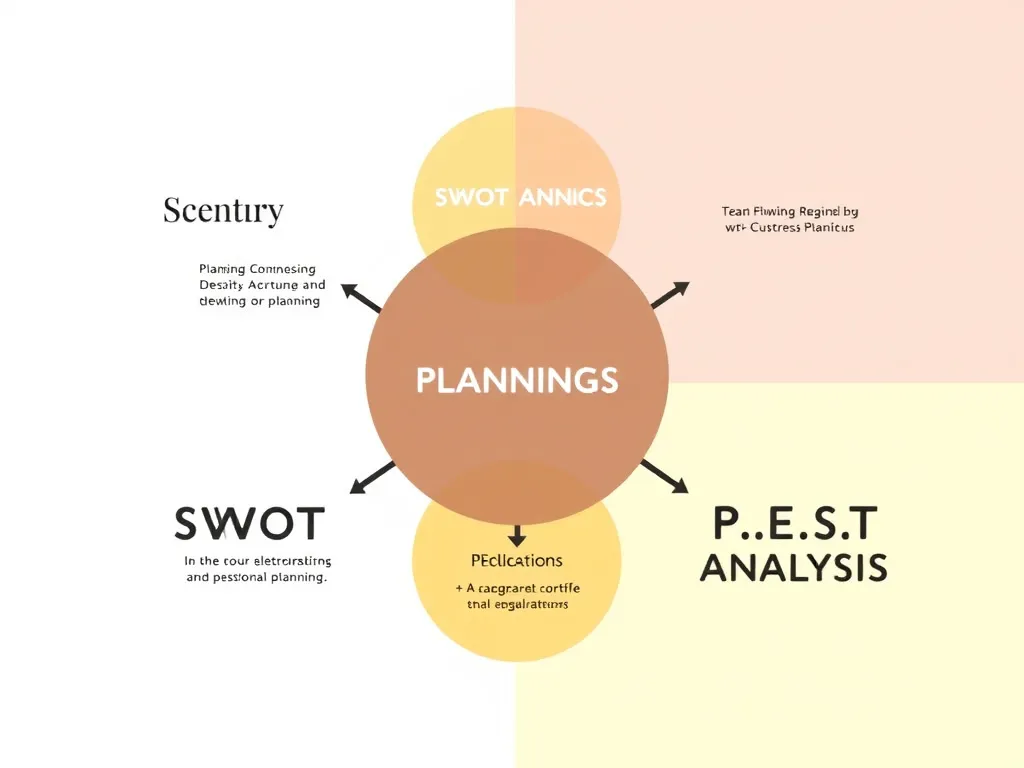
To put foresight into action, SMEs can utilize several strategic planning frameworks and tools. These include:
- Scenario Planning: Imagine multiple possible futures and prepare action plans accordingly. This flexibility helps ensure SMEs are not taken by surprise by unforeseen events. Start with three contrasting scenarios—baseline, accelerated growth, and constrained—and define signposts and triggers that indicate which path is unfolding. Pre-commit to a few “no regrets” moves and a short list of options you will activate if certain signals appear.
- SWOT Analysis: Regular SWOT analyses allow SMEs to assess their strengths, weaknesses, threats, and opportunities continuously, providing a clear path for strategic improvement. Keep it dynamic by refreshing quarterly and tying findings to investment decisions and team objectives, so insights do not remain theoretical.
- P.E.S.T. Analysis: Considering Political, Economic, Social, and Technological factors is crucial to understanding the broader environment affecting business operations—essential for foresight. Localize it by tracking policy changes (such as VAT or labor rules), economic shifts (interest rates or credit conditions), social preferences (tourism behavior or digital adoption), and technologies (AI, automation, cybersecurity) that could reshape cost structures and customer expectations.
Using these frameworks, SMEs can create a systematic approach to foresight that supports proactive, well-informed decision-making. Establish a steady cadence—such as quarterly reviews—with simple metrics like time-to-insight, forecast accuracy ranges, and scenario adoption rates. Maintain a lightweight knowledge repository so learning compounds across teams and over time.
Avoiding Pitfalls and Maximizing Foresight Initiatives
Despite its benefits, foresight comes with challenges. SMEs often face obstacles such as outdated technological infrastructures, limited financing, and insufficient training. Addressing these issues starts with building an organizational culture that values continuous learning and adaptation. It also requires managing common pitfalls like analysis paralysis, overreliance on a single data source, cognitive bias in interpreting signals, technical debt that slows change, and vendor lock-in that reduces strategic flexibility.
Overcoming these barriers involves leveraging government incentives, engaging in public-private partnerships, and investing in employee training programs that build essential skills for foresight execution. Additionally, embedding foresight into the core of business strategy—rather than treating it as an extra function—is crucial for lasting success. Practical steps include launching small pilots with clear exit criteria, adopting a 70-20-10 budget split across core improvements, adjacent bets, and transformative experiments, and creating a capability academy focused on data literacy, scenario thinking, and agile delivery. Establishing simple governance—a cross-functional steering rhythm and transparent decision logs—helps convert insights into consistent action and celebrates quick wins that reinforce momentum.
Conclusion: Empowering Saudi SMEs through Foresight
Foresight equips Saudi SMEs with the ability to navigate future uncertainties and align their strategic goals with Vision 2030’s targets. By embracing foresight, these businesses can position themselves to take advantage of emerging opportunities, helping drive the Kingdom’s economic diversification and resilience. The payoff is practical: better timing on investments, faster product-market fit, steadier cash flows, and a culture that learns faster than competitors.
As foresight becomes key to strategic planning, SMEs will enhance their adaptability, innovation, and competitive edge in the ever-changing global market. This readiness ensures Saudi Arabia’s SMEs contribute significantly to the country’s vision of a diversified and sustainable economic future. A simple starting point is a 90-day foresight sprint—scan, frame scenarios, test two pilots, and set a review cadence—that turns ambition into measurable progress and builds the confidence to scale.

Sources
Frequently Asked Questions
Why is strategic foresight important for SMEs in Saudi Arabia?
Strategic foresight is crucial for SMEs in Saudi Arabia as it enhances their readiness and flexibility, aligning them with new trends and the goals of Saudi Vision 2030. It helps businesses foresee market changes, enabling them to proactively manage risks and seize opportunities.
What are the key steps to create a foresight strategy within an SME?
Creating a foresight strategy involves several steps: assessing the current market position, conducting a detailed market study, clarifying vision and goals, establishing partnerships, and implementing the strategy in stages while monitoring progress.
How does foresight contribute to the goals of Saudi Vision 2030?
Foresight contributes to Saudi Vision 2030 by enabling SMEs to align with national objectives, adopt digital technologies, and implement sustainable practices, thus enhancing economic capabilities and fostering a thriving private sector.
What role do partnerships play in developing a foresight strategy?
Partnerships with technology and innovation experts are essential for developing a foresight strategy. Collaborating with universities, incubators, and solution providers supports smooth transformation and helps SMEs access advanced digital solutions.
What is the significance of market studies in foresight strategy?
Market studies are significant as they help identify trends and potential disruptions, preparing management for strategic adjustments needed to capture upcoming opportunities and ensure informed decision-making.
How can SMEs track the effectiveness of their foresight strategy?
SMEs can track the effectiveness of their foresight strategy by implementing it in stages, using dashboards of leading and lagging indicators, capturing quick wins, and holding regular retrospectives to adjust strategies as necessary.
