
AI-Enhanced Financial Strategy: Real Saudi Success
The adoption of artificial intelligence (AI) in financial strategies has initiated a groundbreaking era for businesses around the globe. In Saudi Arabia, this change is producing impressive results across the finance sector, providing companies with improved precision, effectiveness, and potential for strategic growth. What was once a set of experimental pilots has matured into core capabilities that touch everything from credit decisioning and treasury operations to customer service and regulatory compliance. The momentum is fueled by a blend of factors unique to the Kingdom: a young, digitally engaged population; rapid expansion of cloud and data infrastructure; and a regulatory and policy environment that encourages innovation while keeping a strong eye on resilience and consumer protection. For banks, insurers, asset managers, and fintechs, AI is no longer a futuristic add-on—it is a competitive necessity that shapes product design, risk appetite, and the overall cost-to-income trajectory.
Saudi Banking Sector Overview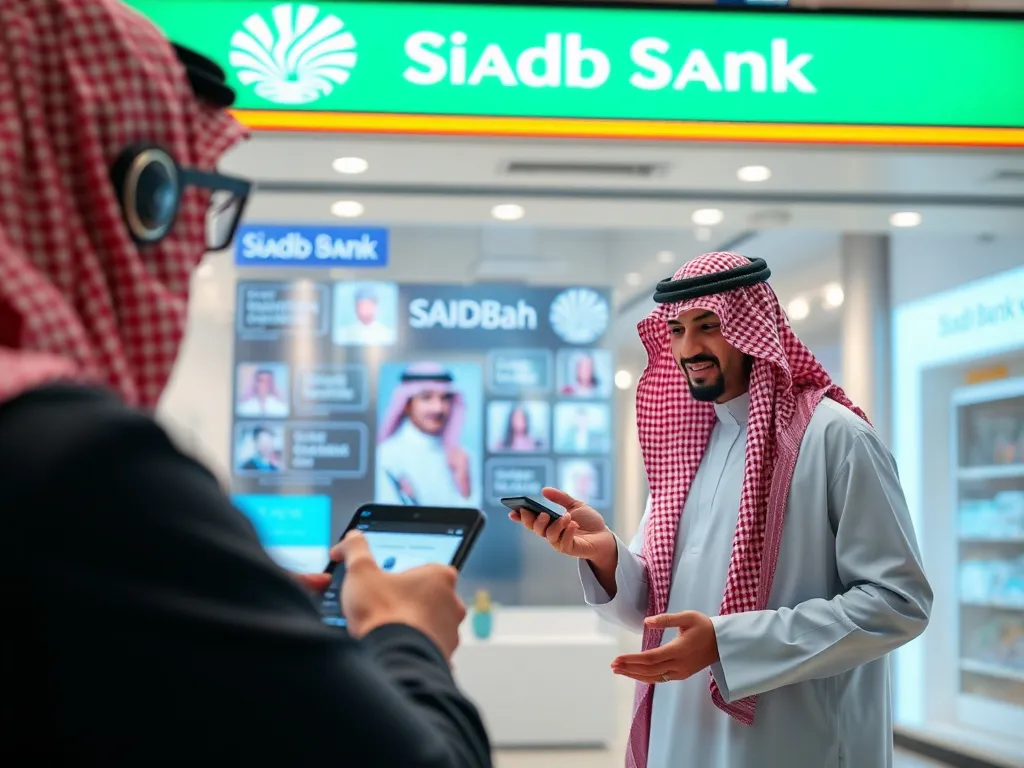
Saudi Arabia’s banking industry is experiencing a significant transformation fueled by AI and a broader digital shift. Inspired by Vision 2030, banks are embracing a digital-first mindset to meet growing customer demands and address the challenge from rising fintech firms. Integrating AI into operations is enhancing efficiency, improving customer experience, and simplifying decision-making. This transformation is reinforced by national programs such as the Financial Sector Development Program, the growth of real-time payments (for example, the Sarie instant payments system), and continued investment in open banking capabilities that allow customers to securely share data and access new services. Collectively, these shifts push banks to rethink the operating model: front-office interactions are being reimagined for speed and personalization, middle-office risk functions are leveraging machine learning for more nuanced risk-weighting, and back-office work is increasingly automated to reduce errors and accelerate processing time.
In this competitive environment, banks like Riyad Bank and Al Rajhi Bank are leading the charge, using AI to improve customer interactions and compliance. Supported by Saudi Central Bank guidelines, these initiatives reflect a national drive toward technological advancement. Institutions are building multilingual virtual assistants that understand Arabic and English, deploying analytics to anticipate customer needs at key life moments, and applying advanced models to strengthen anti-money laundering controls. The focus is not just on technology deployment but on organizational readiness: banks are setting up cross-functional squads, upskilling relationship managers to interpret AI insights, and establishing model risk management processes that give executives and regulators confidence in automated decisions. The outcome is a sector that is more agile and inclusive, with the capacity to extend tailored credit to underserved SMEs and to offer investors intuitive, mobile-first tools that keep pace with global standards.
AI Implementation in Saudi Finance
Saudi National Bank (SNB), the largest lender in the Kingdom, serves as a prime example of AI in action. The bank employs an Arabic native large language model, Tameel, to handle SME lending processes. This has reduced application processing time from 11 to 4 working days, illustrating AI’s power to boost operational efficiency AI in Arabia . Beyond speed, the solution adds depth: Tameel can read and summarize unstructured documents, extract key figures from financial statements, and generate reasoned explanations that help credit officers understand the drivers of each recommendation. The system also supports human-in-the-loop workflows—transactions exceeding certain thresholds or presenting atypical risk factors are automatically flagged for expert review, preserving prudent judgment while still capturing the bulk of automation benefits. Crucially, because the model was trained with sensitivity to Arabic morphology and Saudi commercial context, it can interpret a range of business narratives and documentation styles more accurately than generic models. SNB’s experience underscores another lesson many banks are internalizing: when AI is integrated with upstream onboarding, KYC/KYB checks, and downstream core banking systems, the compounded value—fewer reworks, cleaner data, faster disbursements—can materially improve both customer satisfaction and the bank’s cost-to-serve.
Al Rajhi Capital’s partnership with IBM to update its digital infrastructure further demonstrates AI’s influence on financial strategy. IBM Cloud-based solutions facilitated the launch of the Super App, which combines all investment services into one platform IBM . Since its introduction, Al Rajhi Capital has seen a 40% rise in brokerage volumes, highlighting the financial benefits achievable with strategic AI use. The Super App provides a unified experience for equities, sukuk subscriptions, mutual funds, and research insights, with AI quietly orchestrating personalized recommendations, content ranking, and nudges that guide investors toward relevant opportunities. Under the hood, containerized microservices and API-first design allow rapid iteration without service disruptions, while analytics feed product teams with real-time behavior signals to test new features. On peak market days or during major IPOs, elastic scaling ensures performance remains consistent. For clients, the experience feels seamlessly integrated; for the institution, it is an engine that harmonizes distribution, operations, risk, and compliance.
Case Studies: Leading AI Transformations in Saudi Finance
The following real-world instances demonstrate where AI-driven financial strategies have thrived: each example pairs a clear business problem with a focused application of AI, wraps it in robust governance, and measures results in operational and financial terms. Together, they show that impact rarely comes from a single model in isolation; rather, it results from linking models to well-designed processes, clean data pipelines, and accountable teams. These cases also demonstrate that the Saudi market’s specific conditions—Arabic language nuances, local regulatory imperatives, and rapidly evolving customer expectations—reward organizations that localize their AI approach while still leveraging global best practices. From underwriting to digital investing, the pattern is repeatable: targeted use cases, fast feedback loops, and a willingness to move successful pilots into production with the right controls.
-
Case Study 1: Saudi National Bank’s AI Integration
Saudi National Bank’s AI system, Tameel, has revolutionized its loan-approval process, significantly cutting costs and processing times. The model speeds up revenue recognition, frees staff for strategic tasks, and showcases the financial leverage possible through AI AI in Arabia . In practical terms, Tameel helps frontline teams assemble complete, consistent applications by validating required documents and flagging potential gaps before they become bottlenecks. During underwriting, it consolidates bank statements, tax filings, and management commentary into concise briefs tailored to the risk factors relevant to each sector—whether construction, retail, logistics, or professional services—so analysts can focus on judgment rather than transcription. The bank has implemented guardrails that define where the model may auto-approve within strict exposure and risk bands, and where a human decision is mandatory, creating a layered defense that balances efficiency with prudence. This orchestration extends into collections and portfolio monitoring, where predictive indicators support early engagement with customers who may need restructuring options, improving outcomes for both parties. The cultural impact has been equally important: by removing routine work, SNB has created room for analysts to deepen client relationships and develop new solution ideas for SMEs, embedding AI as a partner rather than a replacement. The result is an end-to-end credit journey that is faster and more transparent, with a clear audit trail that satisfies internal and external stakeholders alike.
-
Case Study 2: Al Rajhi Capital’s Digital Transformation
Al Rajhi Capital’s collaboration with IBM illustrates the merging of AI and financial services. The company’s shift to a digital framework has enhanced customer satisfaction and increased asset management onboarding tenfold IBM . The Super App blends a sleek interface with intelligent capabilities: onboarding journeys adapt dynamically to a user’s investment profile, robo-advisory algorithms generate portfolios aligned with risk tolerance and Shariah guidelines, and real-time alerts surface relevant market moves without overwhelming users with noise. A layered analytics stack captures engagement patterns and feeds experimentation—product managers run controlled tests on navigation flows, educational content, and pricing displays to find the versions that boost conversion and retention. Operationally, the platform’s microservices communicate through well-governed APIs, making it straightforward to plug in new data sources or third-party tools while maintaining security and compliance. Crucially, the same intelligence that aids clients also supports internal teams: advisors can view prioritized leads and suggested next-best-actions informed by a customer’s recent behavior, and operations staff receive early warnings about spikes in demand so capacity can be adjusted proactively. The combination of thoughtful design, AI-driven insight, and resilient infrastructure turns the app into a growth lever rather than a static channel.
-
Case Study 3: Industry-wide AI Adoption Trends
As a leader in AI expansion, Saudi banks are transitioning from isolated innovation labs to comprehensive operational integration, as noted by Renad Al Majd Group (RMG). AI now oversees credit approvals, fraud detection, and customized customer advice, highlighting the massive shift in banking leadership RMG . This transition is characterized by the adoption of enterprise AI platforms, standardized model development lifecycles, and automated monitoring that tracks drift, bias, and performance in real time. Customer service is increasingly mediated by virtual assistants capable of understanding local dialects and switching context across channels, while fraud teams augment their rules engines with anomaly detection to uncover subtle, evolving patterns. In the physical network, forecasting models help manage cash logistics and ATM replenishment, reducing downtime and optimizing costs. Treasury desks use scenario analysis to test funding strategies under different rate environments, and finance teams accelerate regulatory and financial reporting by automating data reconciliation and narrative generation. Across the board, the role of the Chief Data and Analytics Officer is becoming more central, with direct accountability for business impact, not just model output. The lesson for the broader ecosystem is clear: when AI is treated as an enterprise capability—supported by data quality programs, common tooling, and aligned incentives—its benefits compound across products and functions.
Actionable Strategies: Leveraging AI for Financial Success
As AI becomes widespread across Saudi banking operations, businesses can reap substantial rewards by embracing similar technologies. The following strategies can guide integration: start with a clear problem statement and a measurable outcome, build only what differentiates you competitively, and choose partners for everything else. Above all, invest in the data pipelines and governance that keep models reliable as conditions change. A phased roadmap—combining quick wins in operations with bolder bets in revenue growth—allows teams to learn fast while limiting risk. Equally important is change management: equip frontline staff with simple tools, solicit feedback continuously, and celebrate improvements in both customer and employee experiences.
-
Embrace AI-Powered Decision Making
Implement AI that enhances data analysis to enable quicker, more informed decisions. The reduction of manual tasks seen in SNB’s deployment suggests a path toward greater efficiency and strategic insight. Begin by prioritizing use cases where decisions are frequent, data-rich, and time-sensitive—credit underwriting, fraud screening, next-best-offer recommendations, or service triage. For each, define the target metrics (for example, turnaround time, approval accuracy, or loss rates) and design human-in-the-loop checkpoints where expert judgment adds value. Create feature stores that standardize how inputs are engineered and shared across models so insights are consistent, explainable, and reusable. As confidence grows, expand into areas that compound impact: dynamic pricing that reflects risk and demand, treasury allocation guided by real-time liquidity signals, and portfolio analytics that anticipate shifts in customer needs around life events such as home purchases, education planning, or business expansion. In Saudi Arabia’s context, incorporate local seasonality—Ramadan, Hajj, and fiscal cycles—into models so predictions reflect real operating conditions. Finally, make decision intelligence accessible: embed concise explanations directly into the tools that relationship managers and advisors use so they can articulate the “why” behind each recommendation to customers and committees alike.
-
Invest in Digital Infrastructure
Following Al Rajhi Capital’s lead, updating digital infrastructure alongside AI tools can broaden financial services and enhance customer interaction. Treat infrastructure as the foundation that determines speed, resilience, and security: adopt a modular, API-first architecture that allows you to integrate data sources, launch features, and scale elastically without disrupting service. A modern data stack—combining streaming ingestion, a governed lakehouse, and robust metadata management—ensures that models are trained on fresh, high-quality data and that lineage is fully traceable for audits. Co-locate critical workloads in-region to meet data residency requirements and minimize latency for mobile experiences. Build observability into every layer so teams can detect anomalies early, roll back quickly, and continuously improve. For client channels, emphasize performance and inclusion: biometric authentication, Arabic-first interfaces, and accessible design standards improve trust and reach. Within operations, pair RPA with AI to automate document handling, reconciliations, and report compilation. Infrastructure also includes talent and ways of working—establish platform teams that provide reusable components, developer self-service, and common security controls so product squads can move fast without reinventing the wheel. The payoff is an environment where experimentation is safe and scaling successful ideas is routine.
-
Strengthen AI Governance and Compliance

Ensure AI deployment is supported by strong governance, as stressed by the Saudi Central Bank. Complying with national frameworks bolsters operational legitimacy and long-term sustainability AI in Arabia . Build a model lifecycle that begins with clear objectives and risk classification, proceeds through documented development and independent validation, and enforces policies for monitoring, retraining, and retirement. Embed principles of responsible AI—fairness, privacy, security, and transparency—into practical controls: bias checks on training data, explainability techniques suited to end users, and robust access and change management. Align with recognized international guidance where relevant and augment it with local requirements on data residency, consent, and reporting. For high-stakes use cases like credit decisions or AML, establish model committees that include business, risk, legal, and technology leaders, and ensure Shariah governance bodies have appropriate insight into how AI-enabled products operate. Vendor oversight is equally vital: assess third-party models and datasets for provenance, performance, and licensing terms, and maintain contingency plans in case a provider changes access or pricing. Finally, invest in literacy—train executives, product owners, and frontline staff on how AI works, what its limitations are, and how to escalate issues. When governance is treated as an enabler rather than a brake, it builds confidence to scale responsibly.
Conclusion
AI is transforming Saudi Arabia’s financial sector, from operational efficiency to innovative service models. Real-world achievements at Saudi National Bank and Al Rajhi Capital illustrate the powerful impact AI can have on financial strategy. Looking forward, ongoing integration and evolution will further propel Saudi businesses, keeping them at the cutting edge of global innovation. Organizations can use these insights to leverage AI’s dynamic potential to redefine financial landscapes. The path to value is clear: start with targeted, high-impact use cases; invest in the data and infrastructure that make models dependable; and govern outcomes with rigor so stakeholders trust the results. As banks and investment firms embed AI deeper into credit, investing, service, and compliance, the distinction between “digital” and “core” will fade—AI will simply be how finance works. For leaders mapping the next 12 to 24 months, the mandate is to move from isolated pilots to scaled delivery, to measure progress in tangible KPIs, and to keep people—customers and employees—at the center of every design choice. Done well, AI will not just make existing processes faster; it will open new markets, expand financial inclusion, and strengthen the Kingdom’s position as a global hub for innovative, resilient finance.